A Hot Potato in the AI Semiconductor Market: The Current State and Outlook for Nvidia
Recently, there have been divided opinions in the market regarding Nvidia's latest earnings report. As the undisputed leader in the AI semiconductor market, the company has shown incredible growth, but at the same time, uncertainty is looming due to several variables. Today, let's carefully analyze Nvidia's latest performance and key issues, and discuss the future market outlook together.
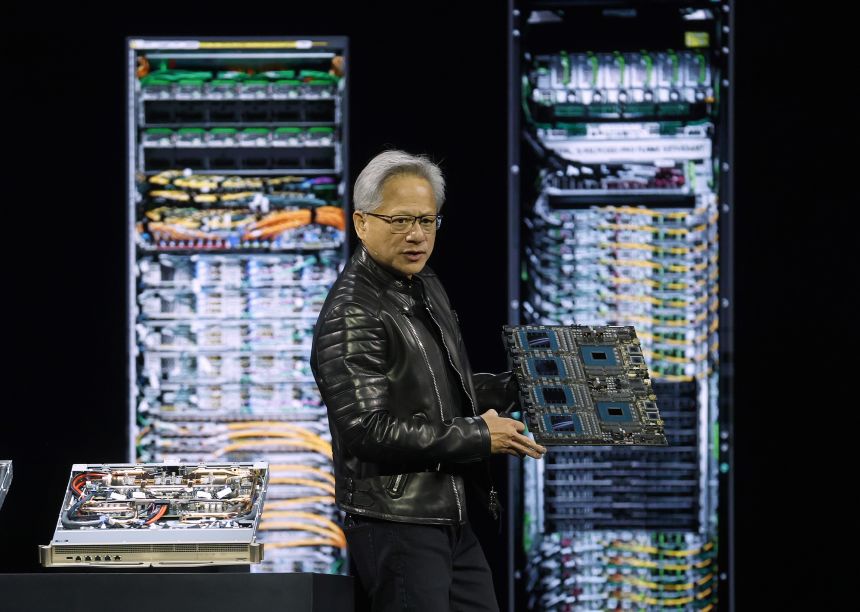
https://edition.cnn.com/2025/08/27/tech/nvidia-earnings-china-trump
The Other Side of the Performance: Beating Expectations, but Not Without Concerns
Nvidia's revenue in the last quarter grew by 56% year-on-year to $46.74 billion, slightly exceeding Wall Street's forecast of $46.06 billion. Earnings per share also came in at $1.05, just topping the estimated $1.01. On the surface, this is remarkable growth, but a closer look reveals a few worrying points.
1. Uncertainty in the China Market: The biggest variable is the Chinese market. Due to export regulations on H20 chips, sales to China have virtually stopped. Nvidia is pushing for a resumption of exports on the condition of paying 15% of its China sales to the U.S. government, but a regulatory framework has not yet been finalized, making it unlikely for H20 shipments to China in the third quarter. CEO Jensen Huang estimates the potential size of the Chinese market to be $50 billion, so if this issue is not resolved, it could significantly constrain Nvidia's growth.
2. Signs of Slowing Growth: Nvidia's year-on-year revenue growth rate slowed from 122% in the previous quarter to 56% this quarter. Additionally, revenue growth in the data center business, which accounts for 88% of total revenue, also slowed from 10% in the previous quarter to 5% this quarter. While still a high growth rate, it fell short of the market's expectation for "perfect" growth from Nvidia.
3. Increased Customer Concentration: The top two customers accounted for 39% of Nvidia's Q2 revenue (Customer A 23%, Customer B 16%). This is a significant increase from 25% in the same quarter last year. Although Nvidia has not disclosed the identities of these customers, they are highly likely to be major Cloud Service Providers (CSPs). A higher dependency on a few specific customers poses a risk that Nvidia's revenue could be significantly affected by changes in their investment plans.
Hope Is Still Alive: The Future Outlook
Despite these concerns, the positive outlook for Nvidia remains strong. Several analysts agree that Nvidia's earnings report by no means indicates a slowdown in the overall AI industry.
1. Massive AI Infrastructure Investment: CEO Jensen Huang projected that the AI revolution has just begun and that $3 to $4 trillion will be invested in AI infrastructure over the next five years. This will serve as a huge opportunity for Nvidia's long-term growth. The fact that the demand for building AI systems is exploding in various sectors beyond hyperscalers, including enterprises and governments, is also a positive sign.
2. Technological Superiority: Nvidia holds an undisputed technological edge in the AI semiconductor market, leading the industry. In particular, the upcoming Blackwell processor is expected to offer significantly more powerful performance than existing chips. Jensen Huang also mentioned the possibility of exporting Blackwell chips to China, suggesting that if the regulatory issues are resolved, additional growth momentum could be secured.
3. In-House AI Model Development: Microsoft (MS) recently began publicly testing its own AI model, MAI-1. This can be interpreted as a signal that MS is trying to reduce its dependence on OpenAI. As MS revealed that it used 15,000 Nvidia H100 GPUs to develop its own AI model, the demand for Nvidia's semiconductors is likely to increase as major tech companies accelerate the internalization of AI technology.
Summary: Between Immense Potential and Unstable Variables
There is no doubt that Nvidia remains a key company in the AI era. Within the massive trend of AI infrastructure investment, Nvidia's exclusive technology will be a powerful growth engine.
However, the uncertainty in the Chinese market, the high dependency on a few customers, and the movement of competitors developing new AI models are challenges that Nvidia must overcome. Investors are paying more attention to these external factors than to Nvidia's fundamentals, and the stock price may show volatility in the short term.
In conclusion, Nvidia can be said to have two faces: 'high growth' and 'uncertainty'. From a long-term perspective, if you believe in the growth of the AI industry, Nvidia's potential is still attractive. However, this is a time when a cautious approach is needed, considering the short-term risk factors as well.
Comments
Post a Comment