Economic Insights for October 11, 2025
⚠️ Disclaimer: This content represents personal views based on publicly available economic indicators. All investment decisions should be made based on your own judgment and responsibility.
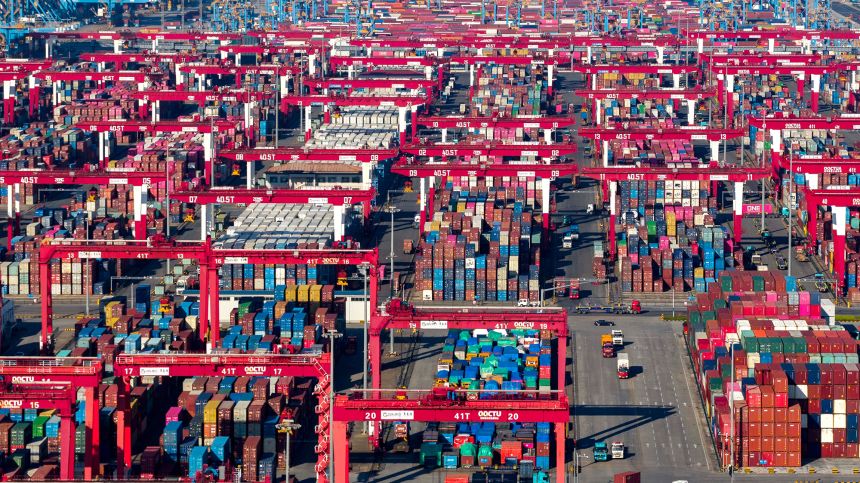
https://edition.cnn.com/2025/10/10/economy/trump-china-tariff-threats-economy
Global Market Status: Steep Correction Fueled by Rising US-China Trade Tensions
On October 11, 2025, global financial markets experienced a sharp downturn following President Trump's threats of increased tariffs on China and his suggestion of canceling a meeting with President Xi Jinping. US equities recorded their largest drop since April, and China's expanded restrictions on rare-earth element (REE) exports delivered a direct blow to semiconductor and technology stocks. Compounding the uncertainty, the 10th day of the US government shutdown has delayed the release of key economic indicators. Investor preference for safe-haven assets intensified, pushing gold prices above $4,000 per ounce, while Treasury yields fell.
1. Stock Market Trends
United States (S&P 500): The S&P 500 index plunged 2.7%, marking its largest drop since April. The Dow fell 879 points, and the Nasdaq lost 3.6%, erasing all weekly gains. The market cooled abruptly after President Trump threatened "massive" tariff increases on Chinese goods and suggested he might cancel a meeting with President Xi Jinping. Semiconductor stocks were hit particularly hard: AMD fell 7.8%, Nvidia 5%, and Qualcomm 7.3%. China's ongoing antitrust investigation into Qualcomm also weighed on sentiment. The 10-day government shutdown further exacerbated uncertainty by delaying the release of key economic data.
Japan (Nikkei 225): The Nikkei 225 closed down 1.01% at 48,089, and the Topix fell 1.85% to 3,198. Political uncertainty and comments from the Finance Minister dampened investor sentiment. The Komeito Party announced it would withdraw from the Liberal Democratic Party (LDP)-led coalition government, shaking the position of Prime Minister candidate Sanae Takaichi. Finance Minister Kato expressed concern over "one-sided and rapid movements" in the foreign exchange market; the yen has fallen 3.5% against the dollar since Takaichi's win. Declines were led by SoftBank Group (-3.1%), Sony Group (-4%), Mitsubishi Heavy Industries (-3.7%), and Toyota (-1.7%). Conversely, Fast Retailing surged 6.7% on strong August-end results and an upbeat 2026 growth outlook for North America and Europe.
China (Shanghai Composite): The Shanghai Composite index fell 0.94% to 3,897, and the Shenzhen Composite index dropped 2.7% to 13,355, giving back the previous day's gains. The sharp fall in US stocks, valuation concerns for AI-related companies, the US government shutdown, and the Federal Reserve's rate outlook all acted as headwinds. A 2% decline in the index of US-listed Chinese firms on Thursday signaled weakening momentum for the mainland rally. Investors are watching for a potential Xi-Trump meeting at the APEC summit later this month, following the Communist Party leadership meeting from October 20–23. New energy and tech stocks led the declines, with CATL (-6.8%), Sungrow Power (-7.8%), and Luxshare Precision (-6.9%) sharply lower.
South Korea (KOSPI): The KOSPI rallied strongly, closing up 1.73% at 3,610, following the seven-day Chuseok holiday. Investor sentiment was lifted by rekindled optimism over the global AI boom. Semiconductor and technology stocks surged on news that Reflection AI, an Nvidia-backed firm, raised $2 billion at an $8 billion valuation. SK Hynix gained 7.84%, and Samsung Electronics rose 5.96%. Pharmaceuticals were also strong, with Samsung Biologics (0.30%) and Yuhan Corp (0.58%) rising after Celltrion's biosimilar of Eylea, called Idenzelt, received US FDA approval. The product targets a $10 billion global market and is already approved in Europe and Australia.
United Kingdom (FTSE 100): The FTSE 100 fell 0.9% to 9,427, moving further away from its October 8 record high of 9,549. Declines in mining and industrial stocks outweighed gains in consumer staples. The re-escalation of US-China trade tensions hurt the market, as President Trump stated he saw no reason to meet with President Xi in two weeks and warned of a "massive" increase in tariffs on Chinese goods. This is in response to China's REE export controls on materials essential to US industries. Entain was the biggest laggard, falling about 4%, followed by Mondi (-3.5%), Glencore (-3.2%), and Rightmove (-3.1%). Shell and BP also fell sharply on a plunge in oil prices. Conversely, Admiral Group (+1.7%), Imperial Brands (+1.6%), and Unilever (+1.5%) rose.
Germany (DAX): The DAX fell 1.5% to 24,242, hitting a one-week low. The re-escalation of US-China trade tensions and weakness in defense stocks following a Gaza peace plan weighed on market sentiment. President Trump signaled he wouldn't meet with President Xi, who was scheduled to be in South Korea in two weeks, and would raise tariffs on Chinese goods in response to China's expanded REE export controls. Political uncertainty in France also kept investors on edge. Defense stocks Hensoldt (-4.6%), Renk (-3.7%), and Rheinmetall (-1.1%) were sharply lower. Brenntag plunged 5% after UBS downgraded the company to 'Sell' and cut its price target from €56 to €45. Vonovia was one of the few gainers, up around 1%.
Brazil (Bovespa): The Bovespa fell 0.6% to 141,500. Investors were disappointed after an alternative to the IOF tax increase proposal was defeated, and the general downturn on Wall Street also impacted the market. Petrobras dropped 0.8% as oil prices fell following a ceasefire between Israel and Hamas. The global market was affected by the sharp fall in US stocks after President Trump threatened tariff increases on China and suggested canceling the meeting with President Xi. Ambipar fell 2.8%, giving back all of its early gains when it surged more than 50%, after a court dismissed Bradesco's fraud lawsuit due to insufficient evidence. Steelmaker CSN plunged 3.7% on environmental concerns and a negative outlook from Morgan Stanley, whose analysts forecast losses and no dividends until 2028.
India (BSE Sensex): The BSE Sensex rose 0.4% to 82,501, hitting a three-week high. Gains in bank and energy stocks led the index to its second straight day of gains. Optimism about India-US trade negotiations and continued inflows from Foreign Institutional Investors (FIIs), who have been net buyers of Indian equities in the cash market since October 7, supported the market. State Bank of India rose more than 2%, making it the top gainer, and Axis Bank was up over 1% on the central bank's loan reforms and stronger-than-expected loan growth in the September quarter. NTPC, India's largest integrated power company, also rose over 1% after signing a Memorandum of Understanding with the Gujarat state government on Thursday for cooperation in conventional and non-conventional energy sectors.
2. Commodity Trends
Crude Oil: WTI crude futures plummeted 4.2% to settle at $58.2 per barrel, the lowest level since May 7. The re-escalation of US-China trade tensions rattled the market, as President Trump threatened "massive" tariff increases on Chinese goods and suggested canceling a meeting with President Xi Jinping, fueling fears that a trade war could slow global economic growth and curb oil demand. Bearish sentiment was reinforced by increased supply from OPEC+ and non-OPEC producers. Easing Middle East tensions, including progress on a Gaza ceasefire, also removed risk premium. Short positions on WTI surged as traders accelerated selling, and selling pressure was amplified by risk-off investors pulling out of the stock market. Analysts noted that with no catalyst to support buying, further volatility around $60 could occur due to option hedging concentration.
Gold: Spot gold prices broke above $4,000 per ounce, approaching Wednesday's record high of $4,059. US-China tensions flared again as President Trump said he saw no reason to meet with President Xi, who was scheduled to be in South Korea in two weeks, and was preparing to raise tariffs on Chinese goods. Meanwhile, the Israeli government ratified a ceasefire proposal with Hamas on Friday, setting the stage for a cessation of fighting in Gaza within 24 hours. Gold has gained approximately 52% this year and is heading for its eighth consecutive weekly gain, up 3% for the week. Persistent geopolitical uncertainty, global economic concerns, and increasing expectations for further US rate cuts are driving the ascent. Slower global economic growth, persistent inflation, and continued diversification away from US assets and the dollar are also providing additional support. On the monetary policy front, the Fed is widely expected to deliver 25 basis point rate cuts at each of its remaining meetings this year.
Copper: Copper futures plummeted more than 4% to fall below $4.9 per pound after President Trump warned of a "massive" tariff increase on Chinese goods. Trump stated on social media that such a move was being considered in response to China's recent "hostile" export restrictions on rare earth elements and related technologies. Meanwhile, global supply remains tight due to production disruptions in Chile and Indonesia. Chile's state-owned miner Codelco produced 93,400 tonnes in August, marking the lowest monthly production in 20 years and a 25% decrease year-on-year. A fatal accident at the El Teniente mine on July 31 killed six and injured nine, halting operations for over a week and prompting the company to lower its annual production outlook. Indonesia's Grasberg mine is also experiencing limited production following a fatal accident last month. Canada's Teck Resources also lowered its annual production outlook to 170,000–190,000 tonnes from 210,000–230,000 tonnes.
Soybeans: Soybean futures fell to about $10 per bushel, the lowest level since October 1. Mounting US-China trade concerns pressured the market. Doubt about a resolution to the US-China trade dispute grew after President Trump said he saw no reason to meet with President Xi in South Korea in two weeks and signaled plans to raise tariffs on Chinese goods following China's expanded rare earth export restrictions on Thursday. The federal government shutdown further curtailed market activity, with the US Department of Agriculture delaying its monthly supply and demand report. Details of a promised $10–$15 billion aid package for farmers from President Trump have yet to be disclosed and are expected only after the government reopens. China's Ministry of Agriculture maintained its soybean import forecast for 2025/26 at 95.8 million tonnes in its October report.
Steel: Steel rebar futures rose above 3,080 yuan per tonne, rebounding from a three-month low. The metal sector showed resilience as the Chinese market reopened following the long Golden Week holiday. Steel output remained strong amid robust seasonal demand, and stable infrastructure activity expectations supported overall sentiment. Meanwhile, investors are monitoring trade dynamics after the EU announced plans to reduce its duty-free import quota for steel and double tariffs on excess imports from 25% to 50%. Concurrently, China is curbing new capacity to counter oversupply and weak prices. Steel and iron ore are at the center of the government's anti-monopolization campaign as a persistent property slump pressures steel demand and intensifies competition among steelmakers for limited market share.
Wheat: Wheat futures fell below $5 per bushel on Friday, hitting a five-year low. This was due to fading hopes for a US-China trade resolution that could revive stagnant grain exports. Prices retreated after hitting a two-week high on Thursday, pressured by rising global wheat supply, including an upward revision to the Russian harvest by consulting firm Sovecon. President Trump's threat of increased tariffs on China and the cancellation of a meeting with President Xi added further uncertainty to US exports. The weak dollar led to a stronger euro, having a mixed effect on European wheat competitiveness, particularly ahead of a recent 100,000-tonne tender from Tunisia. Traders highlighted French, Romanian, and Ukrainian wheat as well-positioned to supply North African buyers, while Argentine wheat was deemed less competitive due to high freight costs. Overall, the wheat market is shaped by geopolitical tensions, ample global supply, and shifting currency dynamics.
3. Bond Market Trends
US 10-Year Treasury Yield: The US 10-year Treasury yield fell further to 4.06%, reaching a three-week low. This erased the gains made earlier in the week due to escalating concerns about the re-ignited US-China trade war. Geopolitical tensions heightened after President Trump threatened a "massive tariff increase" on Chinese goods and hinted at canceling a meeting with President Xi Jinping in response to Beijing's expanded rare earth export control plans. This follows a series of measures taken by China earlier in the week, including new port fees on US ships and an antitrust investigation into Qualcomm. Meanwhile, the federal government shutdown, now in its 10th day, is further delaying the release of key economic indicators, with next week's scheduled releases, including the CPI, also likely to be postponed. Investors continue to price in a 25 basis point Fed rate cut later this month, with the probability of a further cut in December holding firm at about 83%.
Japan 10-Year Government Bond Yield: The Japanese 10-year government bond yield held just below 1.7%, nearing the 17-year high of 1.705% reached on October 8. Investors are weighing the new political landscape and its potential implications for the Bank of Japan's (BoJ) policy path. Komeito, the LDP's long-time coalition partner, announced it would leave the ruling bloc after new LDP President Sanae Takaichi rejected its proposal regarding political funds. This split ends a 26-year alliance and forces the LDP to seek support from opposition parties to get Takaichi ratified as Prime Minister, potentially complicating her expansionary policy agenda. On the monetary policy front, the yen's 3.5% drop against the dollar since Takaichi's win has led investors to increase bets on a possible BoJ rate hike as early as October 30, which could further fuel import-driven inflation. Data showing September wholesale prices rose 2.7% year-on-year, exceeding the 2.5% forecast, also added to these expectations.
China 10-Year Government Bond Yield: The Chinese 10-year government bond yield fell to approximately 1.84% on Friday, extending its losing streak to a fifth session and reaching a three-week low. The market reopened this week after China's extended "Super Golden Week" holiday, and investor attention shifted to the evolving US-China trade relationship. Beijing appears to be leveraging its position in negotiations with Washington, evidenced by China's lack of US soybean purchases despite the harvest season and strengthened restrictions on rare earth exports. Amid rising trade tensions, President Trump has threatened to halt imports from China while promising greater market access for US farmers. Although Trump expressed optimism about a high-level meeting expected later this month, Beijing has yet to officially confirm. Investors now await next week's inflation and trade data for insight into China's economic outlook amid internal and external pressures.
South Korea 10-Year Government Bond Yield: The South Korean 10-year government bond yield climbed toward 3% in early October, reaching its highest level since July 10. This was driven by cautious remarks from the Bank of Korea (BoK) and broad market fervor. The central bank noted that while financial markets were largely stable during the holiday period, risk factors had slightly increased due to global uncertainties and persistent domestic risks. The BoK's guarded signal suggests a balanced approach to rates. This follows policymakers' decision to freeze the rate at their second meeting in August, highlighting concerns over the Seoul property market, rising household debt, and a cautious approach to easing. Latest economic data showed stronger-than-expected Q2 GDP, further limiting the BoK's ability to aggressively ease ahead of its next rate decision later this month.
Germany 10-Year Government Bond Yield: The German 10-year Bund yield tumbled to 2.63%, its lowest since August 7. This was driven by escalating US-China tensions, which sparked fears of a global trade war. President Trump said on Friday he saw no reason to meet with President Xi in South Korea as scheduled in two weeks, and stated he was preparing to raise tariffs on Chinese goods. Investors also kept a close eye on the political situations in France and the US, as well as disappointing German economic data. French President Emmanuel Macron is expected to appoint a new Prime Minister following the resignation of Sébastien Lecornu, with an early general election likely to be avoided. The US government shutdown is expected to continue, threatening the release of key economic indicators and potentially affecting the Fed's policy guidance. In Germany, exports unexpectedly decreased, and imports fell more sharply than anticipated, following steep declines in industrial production and factory orders earlier.
UK 10-Year Gilt Yield: The UK 10-year Gilt yield was largely unchanged at 4.72%, as investors turned cautious ahead of next month's budget and amid growing concerns about debt sustainability. Chancellor of the Exchequer Rachel Reeves faces a difficult balancing act: achieving fiscal targets while avoiding measures that could stifle growth. The market expects Reeves to raise taxes again, as her first budget raised employer national insurance contributions by £25 billion. Analysts forecast modest growth for the rest of the year, but see inflation rising to 4%, double the Bank of England's (BoE) target. The market is pricing in two BoE rate cuts next year, with the first not fully expected until April. Meanwhile, BoE Chief Economist Huw Pill warned against trying to fix all of the UK's economic challenges through monetary policy, urging a "conservative central bank" focused on controlling inflation. His comments push back against calls for greater coordination between the BoE and the government as borrowing costs rise and fiscal pressures mount.
Brazil 10-Year Government Bond Yield: The Brazil 10-year government bond yield soared toward 14%, hitting a one-month high. Borrowing costs are rising and demand for long-term paper is waning as the market rapidly re-prices a mix of deteriorating fiscal risk and persistent inflation. Policy-makers' discussions of costly measures like nationwide public transport fare waivers cemented worries about a larger deficit unless fully offset, and reports of budgetary contingent liabilities for state-owned firms added to overall public debt concerns. Concurrently, sticky headline and core inflation and a policy rate held at 15% keep real rates and term premiums elevated, making any move to reinforce fiscal funding more expensive. Finally, Brazil's debt structure, with a large share linked to floating or inflation-linked rates, amplifies fiscal sensitivity to higher yields and prompts investors to demand greater compensation for duration and credit risk.
India 10-Year Government Bond Yield: The India 10-year government bond yield retreated toward 6.5% in October, following a four-week high in late September. Although investors sold bonds after a new 10-year bond auction, dovish guidance from the Reserve Bank of India (RBI) capped yields. The new bond issuance raised 320 billion rupees, following New Delhi's decision to increase the proportion of these securities in its October-March borrowing plan. The government sold the bonds at a cut-off yield of 6.48%, broadly in line with estimates. Meanwhile, the RBI maintained its policy rate at 5.50% at its September meeting, noting that easing inflation opens up policy space to support growth. The market broadly expected a hold, but some economists see room for a 25 basis point cut in December due to external headwinds. The central bank also revised its FY 2026 GDP forecast up to 6.8% and its inflation expectation down to 2.6%, with Governor Malhotra warning that tariffs and trade policies pose risks to external demand.
4. Currency Trends
US Dollar: The Dollar Index fell below 99 on Friday. This was due to the re-emergence of tariff war fears after President Trump said he saw no reason to meet with President Xi in South Korea in two weeks and signaled plans to raise tariffs on Chinese goods. Investors also digested the preliminary University of Michigan Consumer Sentiment report, which showed October sentiment was mostly unchanged but slightly exceeded expectations. The US government shutdown is expected to continue into next week, likely delaying the release of key economic indicators such as the CPI and employment data, which could affect the Fed's rate cut outlook. The market now prices in a 95% chance of a 25 basis point rate cut this month, while the probability of a December cut has eased from 90% to 80%. On a weekly basis, the dollar is set for a gain of over 1%, as political uncertainties in France and Japan pressured the euro and yen.
Japanese Yen: The yen traded at the 152.7 level on Friday, recovering some of its earlier losses, having touched 153.2 intraday. The movement came after reports that the Komeito Party leader informed the LDP chief that Komeito would withdraw from the ruling coalition, as new LDP President Sanae Takaichi "failed to provide sufficient answers on political funding issues." The decision ends a partnership of over 25 years, a relationship Takaichi had previously described as "fundamental" upon her election as party chief last week. The coalition's collapse fueled political uncertainty and cast doubt on the prospect of increased fiscal spending under the new leadership, which had been a key factor pressuring the yen this week. Despite Friday's gain, the yen is set to close the week down 3.6%, trading near a seven-month low.
Chinese Yuan: The offshore yuan strengthened to approximately 7.13 per US dollar on Friday, heading for its second consecutive week of gains. Investor focus shifted to the development of the US-China trade relationship. Beijing appears to be leveraging its position in negotiations with Washington by withholding US soybean purchases despite the harvest season and strengthening controls on rare earth exports. Amid rising tensions between the two economies, President Trump threatened to halt imports from China while promising greater market access for US farmers. Although Trump expressed optimism about a high-level meeting expected later this month, Beijing has yet to officially confirm. Investors now await next week's key economic data, particularly inflation and trade figures, for insight into China's economic outlook amid domestic and external headwinds.
South Korean Won: The South Korean won strengthened slightly to approximately 1,420 per US dollar on Friday but remained near its weakest level in five months. The persistent strength of the dollar continued to pressure Asian currencies. The dollar remained firm throughout the week, benefiting primarily from sharp falls in the yen and the euro. Domestically, sentiment was cautious following data showing that over 470,000 South Korean companies did not make a net profit in 2024, highlighting weak demand and pressure on fiscal revenues. The outlook was partially buoyed by an increase in the nation's foreign exchange reserves for the fourth consecutive month to around $422 billion in September, which provides a moderate buffer against external volatility.
British Pound: The British pound fell to $1.328, a 10-week low. This was pressured by the strong dollar and concerns ahead of the UK's November budget. Traders worry that potential tax hikes to meet fiscal targets could weigh on the already fragile economy and the currency. Chancellor of the Exchequer Rachel Reeves, who is set to deliver the budget on November 26, is expected to focus on fiscal discipline, likely through higher taxes. This mirrors her previous action, which raised employer national insurance contributions by £25 billion. Analysts forecast modest growth for the rest of 2025, but see inflation rising to 4%, double the Bank of England's (BoE) target. The market does not anticipate the next BoE rate cut until April next year, with only two cuts priced in by the end of 2026. BoE Chief Economist Huw Pill urged a "conservative central bank," emphasizing the need to prioritize inflation control over growth intervention, pushing back against calls for a government-BoE partnership to revive investment.
Euro: The euro finished a volatile week, bouncing back above $1.16, recovering from a two-and-a-half-month low of $1.154 touched on Thursday. The recovery came as investors sold the dollar after President Trump said he saw no reason to meet with President Xi in South Korea in two weeks and signaled plans to raise tariffs on Chinese goods. The market also focused on the political situation in France, where President Emmanuel Macron is expected to appoint a new Prime Minister following the resignation of Sébastien Lecornu. Investors welcomed signs that an early general election is likely to be avoided, as Lecornu stated that dissolving parliament was not on the table. On the monetary policy front, the ECB's September meeting minutes showed that policymakers agreed that the current rates were robust enough to address potential shocks amid two-sided inflation risks.
Brazilian Real: The Brazilian Real weakened sharply to approximately 5.48 per US dollar, hitting its lowest level since August 20. This was driven by global markets adopting a risk-off sentiment amid contagion fears. The sell-off was triggered by growing concerns over Brazil's widening fiscal deficit and skepticism about the government's ability to contain spending. Market sentiment deteriorated after a rejected alternative to the IOF tax increase proposal was defeated, which would have altered taxation on financial investments and digital assets. Adding to the fiscal uncertainty, President Lula unveiled a new housing finance plan aimed at expanding mortgage access ahead of the 2026 election, which critics say could strain the budget. As investors sought safety in the US dollar, the Brazilian Central Bank is likely watching closely, but the Real remains vulnerable to both domestic fiscal pressures and global market volatility.
Indian Rupee: The Indian Rupee remained weak at about 88.7 per US dollar, holding steady pressure near its record low. This was due to US policy moves continuing to weigh on the currency. Market sentiment was pressured by a steep 50% US tariff on key Indian products linked to Russian oil import measures and was further hit by stricter immigration regulations. While the Reserve Bank of India (RBI) is actively intervening to curb volatility and has been defending the record low of 88.8, the currency is expected to face downward pressure due to hedging mismatches and foreign fund outflows. Also pressuring the Rupee were the central bank's dovish remarks at its September meeting about the potential for future rate cuts. The RBI froze the repurchase rate and maintained its neutral policy stance, noting that easing inflation opens up policy space to support growth. Elsewhere, broad US dollar strength from weakness in other major currency peers added to the pressure on the Rupee.
💡 Outlook: Market Direction Hinges on US-China Relations
1. Risk of Re-ignited US-China Trade War
The biggest variable this week is undoubtedly the sharp escalation of US-China trade tensions. President Trump's threat of a "massive increase" in tariffs on China and his hint at canceling a meeting with President Xi Jinping shocked the market. China's expanded Rare Earth Element (REE) export controls pose a direct threat to the US semiconductor and technology industries, leading to sharp declines in major tech stocks like AMD, Nvidia, and Qualcomm.
REEs are essential resources for manufacturing smartphones, electric vehicles, and advanced weapon systems, with China controlling about 70% of global production. If China fully leverages this card, global supply chain disruption and rising manufacturing costs are inevitable. This could negatively affect corporate earnings forecasts alongside renewed inflation concerns.
The possibility of a US-China summit at the APEC summit scheduled for late October is the key variable that will determine the short-term market direction. If the meeting falls through, a full-blown trade war is inevitable, leading to a further correction in global equities. Conversely, a signal of dialogue resumption is likely to lead to a quick market rebound.
2. Trajectory of Semiconductor and Technology Stocks
While the South Korean market saw a strong rebound after the Chuseok holiday, driven by the rekindling of the AI boom, technology stocks in the US and China dropped sharply this week. Reflection AI's $2 billion funding success shows the AI fever hasn't cooled, but China's Qualcomm antitrust probe and REE export controls highlighted the vulnerability of the semiconductor supply chain once again.
Although South Korean semiconductor companies like SK Hynix and Samsung Electronics are strong due to AI memory demand, escalating US-China conflict is a double-edged sword for them. Given their high reliance on the Chinese market, additional export restrictions or retaliatory measures could inevitably impact earnings. While AI-related demand will be a supportive factor in the short term, geopolitical risks must be closely monitored.
3. Accelerated Shift to Safe-Haven Assets
Gold prices breaking above $4,000 per ounce and extending an eight-week winning streak underscore the intensity of the safe-haven preference amid extreme uncertainty. Gold, up 52% this year alone, is being driven by a combination of geopolitical risk, expectations of US rate cuts, and concerns over dollar weakness.
In contrast, copper plummeted over 4%, and oil prices hit $58.2 per barrel, the lowest since May. This reflects concerns that a trade war will slow global economic growth and reduce commodity demand. Easing Middle East tensions with progress toward a Gaza ceasefire also accelerated the drop in oil prices by removing risk premium.
The preference for safe-haven assets is also evident in the bond market. The US 10-year Treasury yield hit a three-week low of 4.06%, and the German Bund yield fell to its lowest level since August. This means investors are pulling out of risky assets and seeking refuge in government bonds.
4. US Government Shutdown Creates Data Void
The 10-day US government shutdown is exacerbating market uncertainty by delaying the release of key economic data, such as the CPI and employment figures. With important data for the Fed's monetary policy decisions not being released on time, investors are forced to adopt an even more cautious stance.
The market still prices in a 95% probability of a 25 basis point Fed rate cut later this month, with a high chance (80%) of a further cut in December. However, the longer the economic data void lasts, the more difficult the Fed's policy decisions will become, which will be a factor increasing market volatility.
5. Vulnerability of Emerging Market Currencies and Bond Markets
The sharp drop in the Brazilian Real to its lowest level since August and the surge in the Brazil 10-year government bond yield to 14% demonstrate the fragility of emerging markets. Concerns over an expanding fiscal deficit, persistent inflation, and a high policy rate of 15% are creating a vicious cycle. President Lula's new housing finance plan, seen as a populist policy targeting the 2026 election, further raises concerns about fiscal soundness.
The Indian Rupee is also under pressure near its record low, with the US 50% tariff and strict immigration regulations acting as headwinds. While the RBI is actively intervening, limits to its defense are visible amid continued foreign fund outflows and dollar strength.
The South Korean Won remains near its weakest level in five months, and data showing over 470,000 companies did not make a net profit highlights the domestic economic difficulties. However, the four consecutive months of increase in foreign exchange reserves to $422 billion is a positive factor.
6. Investment Strategy: Defensive Approach and Selective Opportunity Hunting
A defensive portfolio construction is essential in the current market environment. It is advisable to increase the proportion of safe-haven assets like gold and government bonds and limit exposure to volatile risky assets. Maintaining a wait-and-see attitude until the outcome of the US-China summit is known seems wise.
Investment in technology stocks should be very cautious. While AI-related demand is still strong, short-term volatility is inevitable given the REE supply chain risk and the possibility of Chinese retaliation. For Korean chip stocks like SK Hynix and Samsung Electronics, which have strong fundamentals due to AI memory demand, a strategy of phased buying during sharp dips caused by geopolitical risk is valid.
The energy sector is likely to continue its short-term weakness. Easing Middle East tensions and concerns over demand slowdown due to a trade war could push oil prices down toward $60. However, as the geopolitical situation can reverse at any time, one should look for low-price buying opportunities but keep position size limited.
Bonds remain an attractive investment. With further Fed rate cuts expected, US Treasuries will provide stable returns. However, emerging market bonds in Brazil and India are risky due to fiscal issues and currency weakness and should be avoided.
On the currency front, dollar strength is likely to continue for the time being. The yen may face additional downside pressure due to Japanese political uncertainty, and the euro is expected to be volatile depending on the political situation in France. The won's sharp decline is likely to be limited due to sufficient foreign exchange reserves and the BoK's strong defense will, but further depreciation cannot be ruled out if the US-China conflict deepens.
7. Key Monitoring Points
Here are the key events that will drive the market going forward:
October 20–23: China's Communist Party Leadership Meeting. Focus on any signals on economic policy and willingness to improve relations with the US.
Late October: APEC Summit. The key market focus is whether a US-China summit will take place. If it does and positive signals emerge, global equities could rebound quickly; if it is canceled, further correction will be inevitable.
October 30: Bank of Japan Rate Decision. The possibility of a rate hike has increased due to the political instability of the new Takaichi government and yen weakness. If an actual hike is carried out, it could shock global financial markets due to the unwinding of the yen carry trade.
Mid-November: Resolution of the US Government Shutdown and Release of Delayed Economic Indicators. Market volatility could increase as the CPI, employment data, and others are released simultaneously.
November 26: UK Chancellor of the Exchequer's Budget Announcement. Further tax hikes are expected, which could negatively impact the UK economy and the pound.
December: Decision on Further Fed Rate Cut. The market currently anticipates a cut with an 80% probability, but this could change depending on inflation and employment data.
Conclusion: Finding Opportunity Amidst Uncertainty
On October 11, 2025, the global market crashed into the giant reef of re-ignited US-China trade tensions. President Trump's tariff threat and the uncertain meeting with President Xi Jinping led to the largest drop since April, directly hitting the tech and commodity markets. The prolonged US government shutdown amplifies the uncertainty by creating a void in economic data.
However, opportunities exist even in a crisis. The South Korean market showed strong resilience due to the rekindling of the AI boom, and India hit a three-week high on bank reforms and foreign fund inflows. Gold entered the $4,000 era with an eight-week winning streak, and demand for safe-haven assets remains robust.
The market will revolve around the APEC summit in late October over the next few weeks. A rapid rebound is possible if the US-China summit occurs and yields positive signals, but further correction must be prepared for if it is canceled. The BoJ's rate decision, the resolution of the US shutdown, and the UK budget are also variables.
A wise investor should maintain a defensive portfolio now and look for opportunities to phased buy quality stocks that have seen excessive drops. Selective investment and risk management are crucial when uncertainty is high. Focusing on medium- to long-term fundamentals, without being swayed by short-term volatility, will be the best strategy to navigate this tumultuous period.
Keywords: US-China Trade War, Trump Tariffs, Rare Earth Export Controls, Semiconductor Supply Chain, Government Shutdown, Gold $4000, AI Semiconductors, SK Hynix, Samsung Electronics, Nvidia, WTI Oil Price, Safe-Haven Assets, Dollar Index, Fed Rate Cut, BoJ Rate Hike, Yen Weakness, APEC Summit, Xi Jinping, Chinese Economy, Korean Stock Market, KOSPI, Nasdaq, S&P 500, Treasury Yield, Emerging Market Crisis, Brazilian Real, Indian Rupee, Won Exchange Rate, Investment Strategy, Portfolio, Economic Outlook.
Comments
Post a Comment